

Singapore has gotten tougher on scammers. But when it comes to renovation, perhaps we need to be clearer about what a “scam” actually is.
Whenever another renovation company suddenly closes down, the headlines and social media comments arrive very quickly:
“Another renovation scam.”
Homeowners paid deposits. Projects weren't completed. Calls went unanswered. The boss disappeared and naturally, everyone calls it a scam. I understand why.
If you've handed someone $30,000 and suddenly cannot contact him, the legal definition probably isn't the first thing on your mind.
I paid you. You didn't deliver. My money is gone… Sounds like a scam.
Except legally, things aren't quite that simple.
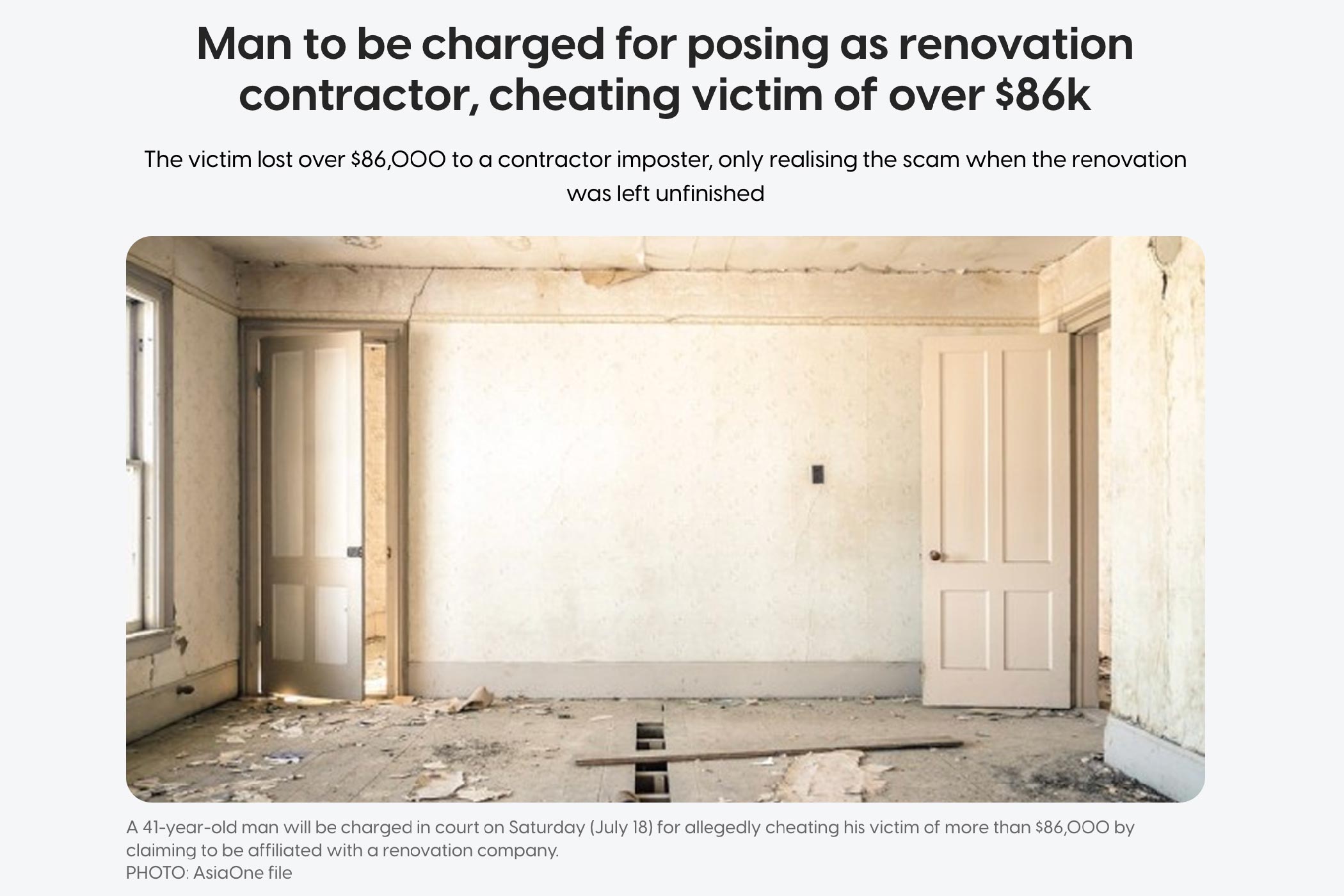
Article & Image Credit: Asiaone
Singapore has gotten tougher on scams
From 30 December 2025, Singapore introduced caning for scams and scam-related offences. For certain scams involving cheating committed mainly through remote communication, offenders can face mandatory caning of at least six strokes.
Traditional cheating offences under Section 420 can also attract discretionary caning.
That's serious. But before every errant renovation contractor starts nervously measuring his backside... there is an important distinction:
A failed renovation is not automatically a scam.
Scam or business failure?
Imagine two contractors.
Contractor A collects $30,000 from a homeowner. He never intended to do the work, makes excuses, disappears, then repeats the same thing with several other homeowners. That's potentially cheating.
Contractor B also collects $30,000, but he genuinely intended to complete the project.
Then his business runs into trouble. Suppliers demand payment. Projects overrun and his cash flow collapses.
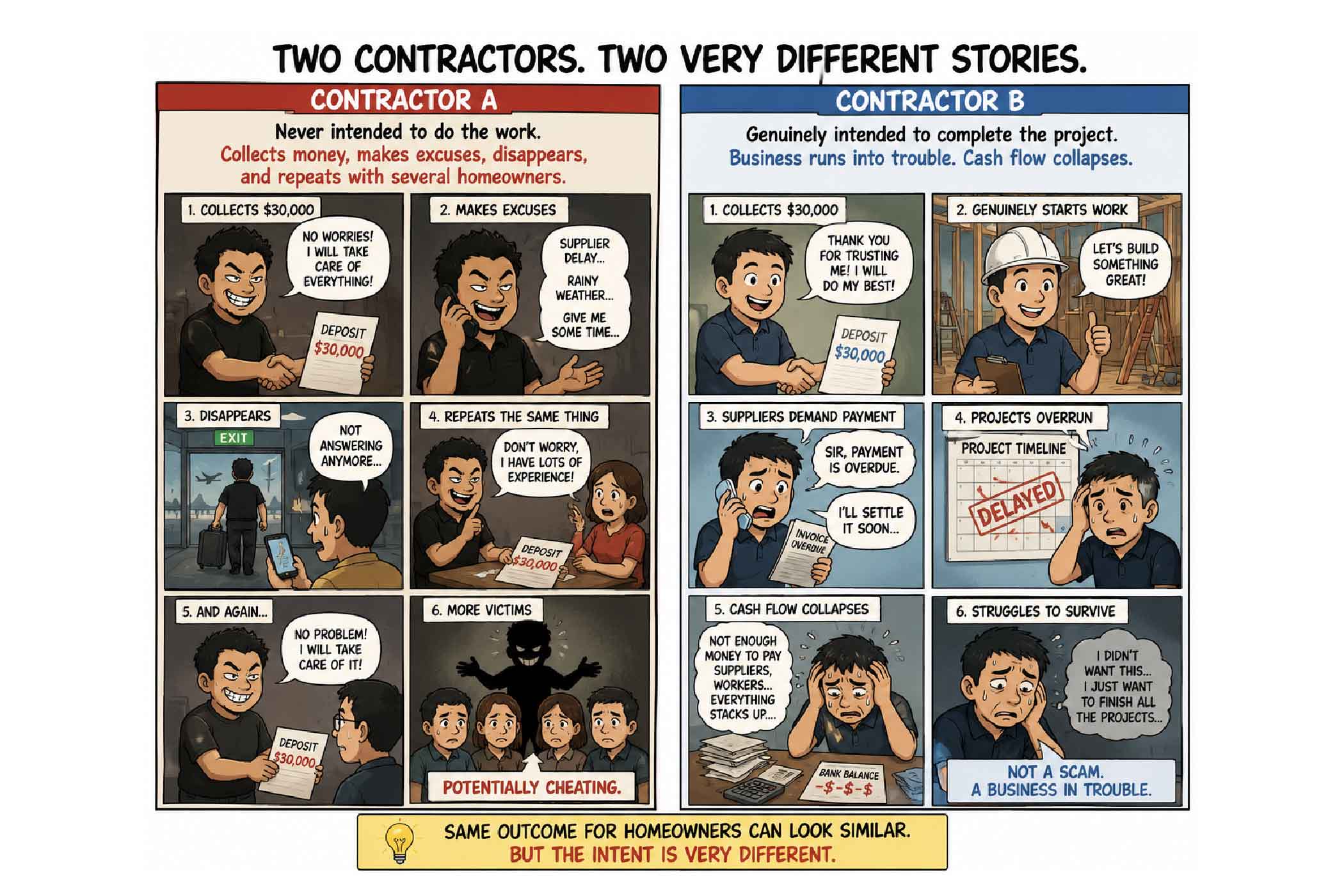
Money from Project B starts paying for Project A. Project C pays for Project B and eventually... there is no Project D. Everything collapses.
To the homeowner, both situations look almost identical, but legally, they can be very different. The key word is:
Intent.
Did you take my money intending to cheat me? Or did you take my money intending to complete the work, but subsequently fail?
Fraudulent intent can make it a criminal matter, but business failure may instead become a civil dispute.
That's why prosecuting so-called renovation “scams” isn't always as straightforward as homeowners understandably expect.
But here's the surprising part
The deposit problem may actually be improving.
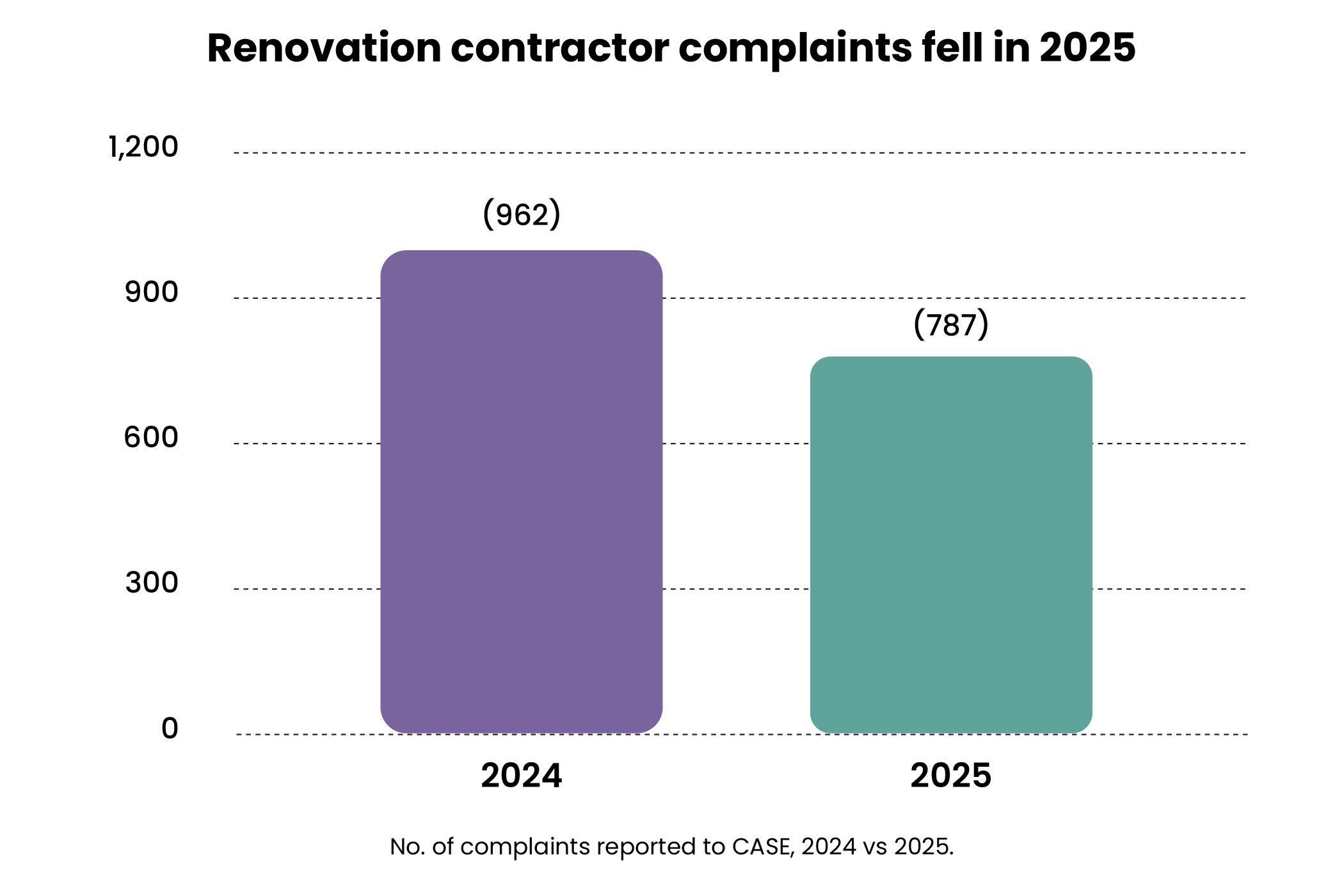
According to CASE, renovation contractor complaints fell from 962 cases in 2024 to 787 in 2025.
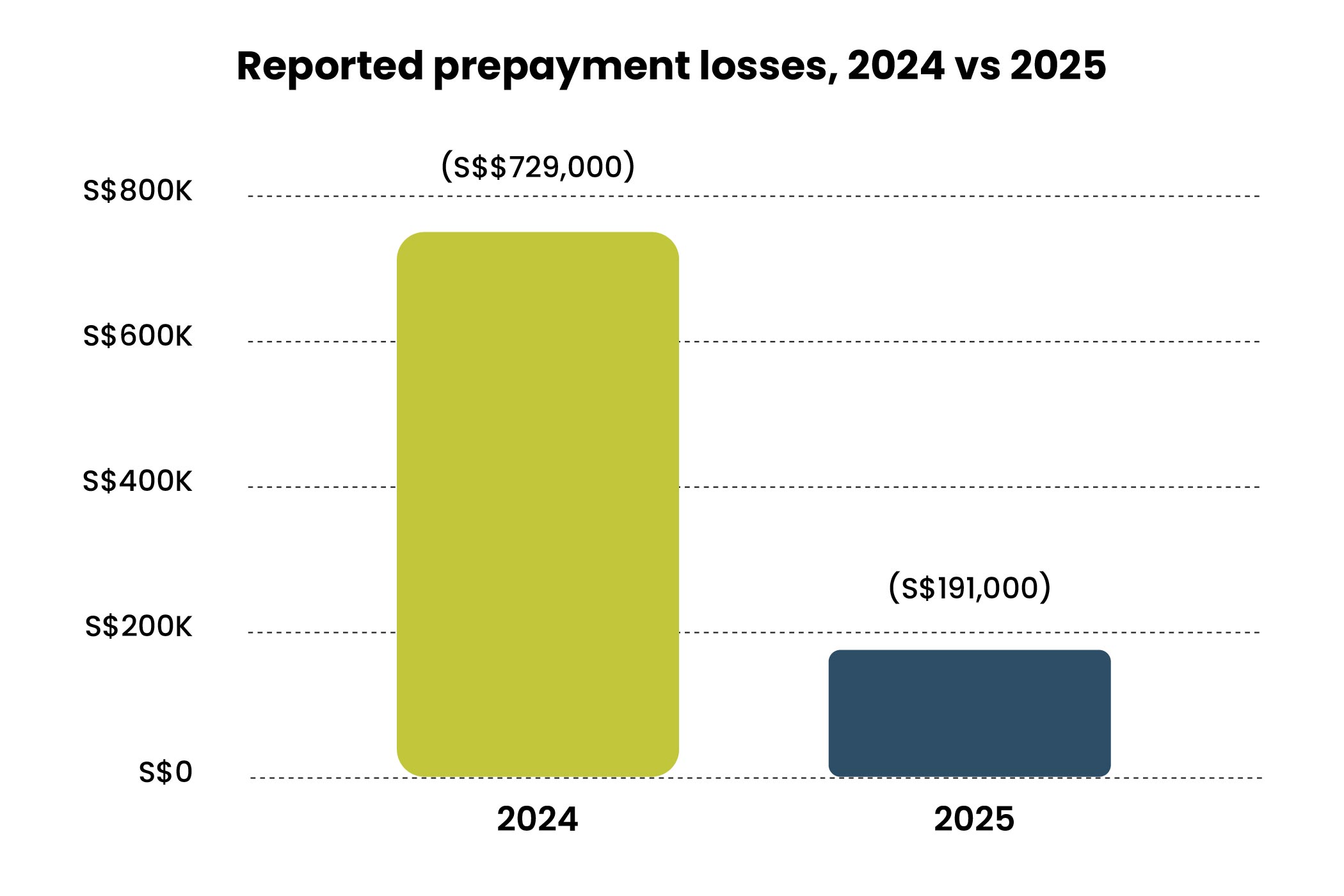
More significantly, reported prepayment losses fell from approximately $729,000 to $191,000.
That's a 73.8% decline.
Homeowners are becoming more aware and safeguards are improving. Consumers are becoming more careful about handing over large deposits.
That's good news, but it creates another question:
If fewer homeowners are losing their deposits, why does renovation still generate so much unhappiness?
Because “not a scam” doesn't mean “good”
Nobody needs to disappear for you to have a terrible renovation.
Your ID can answer every WhatsApp message, your contractor can turn up every day, the company can remain perfectly solvent, and you can still end up with:
-
Crooked carpentry.
-
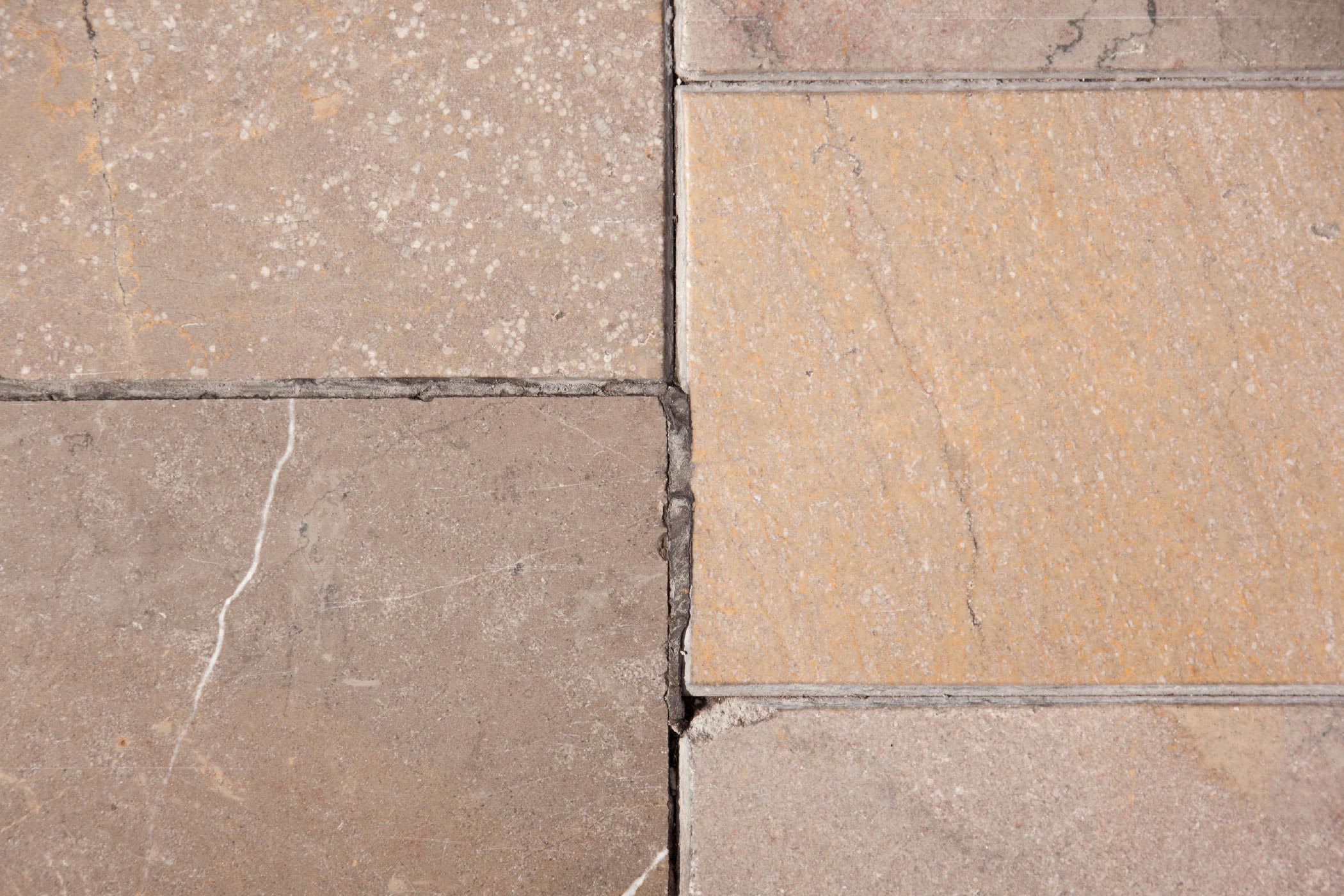
Uneven tiles.
-
Water ponding.
-
Cabinet doors hitting each other.
-
Sockets behind furniture.
-
Endless rectification.
And perhaps the most expensive problem of all:
A badly designed home.
Nobody cheated anybody, but the homeowner still ended up disappointed.
Perhaps we've spent too much time talking about the most dramatic renovation problem… the scammer, and not enough time talking about the more common one… incompetence.

Homeowners are getting tired of figuring out who is actually a designer
I sense another kind of homeowner fatigue emerging. They're not only afraid of being cheated. They're tired of trying to figure out who actually knows what they're doing.
In Singapore, the term “interior designer” is used incredibly broadly. There are professionally trained designers and there are experienced practitioners who have developed genuine competency over many years.
However, there are also project coordinators and renovation salespeople. Yet to the homeowner? Everyone introduces themselves as:
“Hi, I'm your interior designer.”
There's nothing wrong with sales, but being able to sell a renovation package doesn't automatically mean you know how to design a home.
A competent designer should understand space planning, proportion, circulation, ergonomics, materials, lighting, construction and human behaviour.
They shouldn't merely ask:
“Scandinavian? Modern Luxury? Japandi?”
“Okay, can.” Then comes the quotation.
Because a beautiful 3D rendering can still hide a dysfunctional home, and that's where things get tricky.
Poor workmanship can sometimes be rectified. But something can also be perfectly constructed and still be badly designed.
The contractor can follow every drawing exactly... and somehow, the home still doesn't work.
So who tells the homeowner what's actually wrong?
Most homeowners renovate perhaps two or three homes in their lifetime. A renovation professional may work on dozens every year.
So when something looks wrong, the homeowner asks:
“Is this normal?”
Contractor: “Normal lah.”
ID: “Like that one.”
Then what? Google? Facebook? Ask ten people and receive twelve answers?
Sometimes homeowners don't need another opinion from the person who did the work.
They need an independent pair of eyes.
And this is where our thinking at SIXiDES started to evolve.

Protecting the deposit isn't enough
At SIXiDES, we've always believed financial safeguards matter. Protecting homeowners against someone taking their renovation deposit and disappearing is important, but protecting the money is only one part of protecting the homeowner.
Because after signing the contract, they still need to survive the renovation.
-
Construction.
-
Progress claims.
-
Installation.
-
Rectification.
-
Handover.
-
And disagreements.
So we started asking:
How do we help homeowners identify problems before those problems become bigger disputes?
This is one of the reasons SIXiDES collaborated with Uncle Defect.
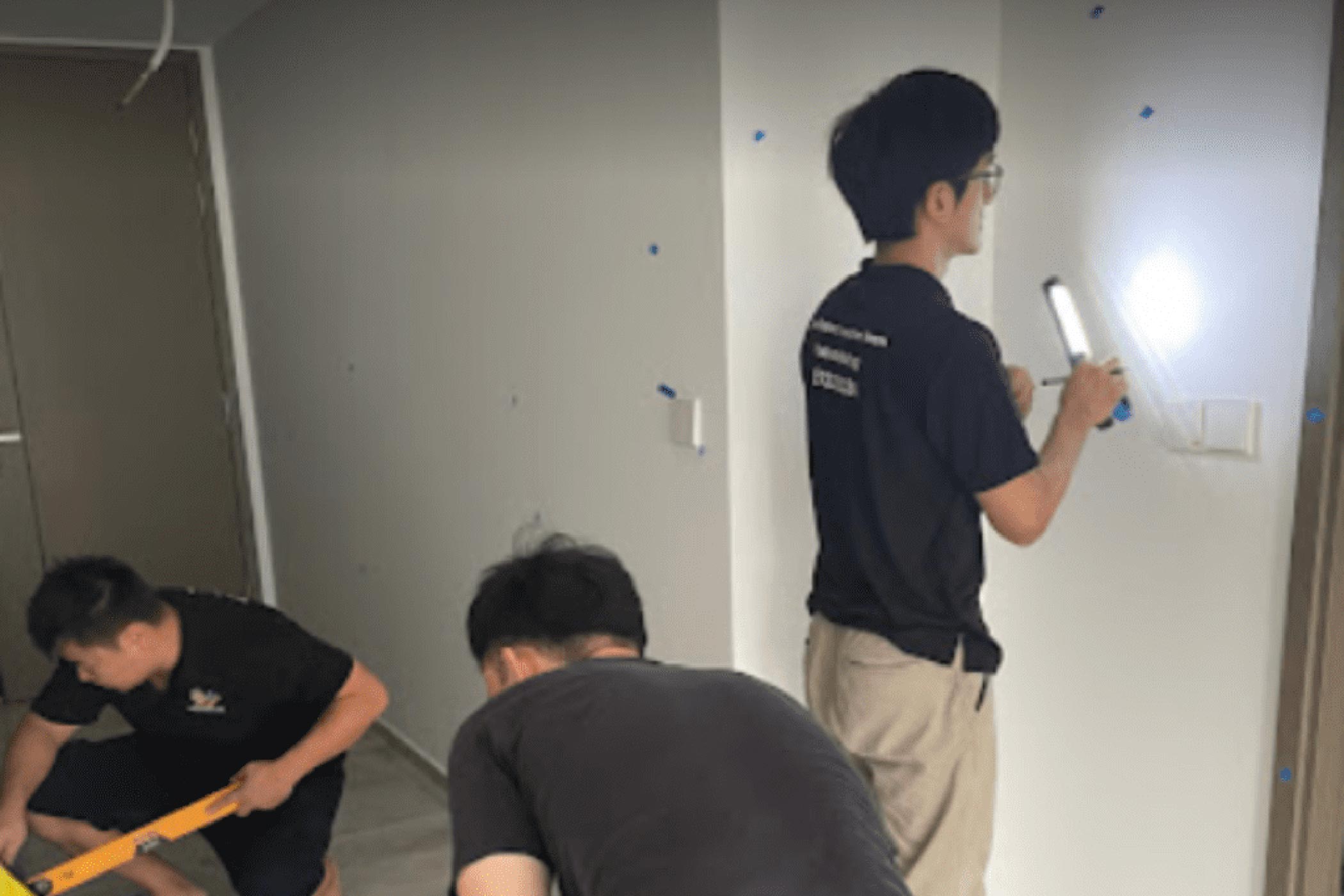
Image Credit: Uncle Defect
Why Uncle Defect?
The idea is quite simple. Financial safeguards deal with the money. Independent inspection deals with the work.
It isn't about sending someone onto a job site looking for reasons to blame the ID or contractor. It's about introducing an independent specialist when the homeowner says:
“I think this is defective.”
And the contractor says:
“I think it's acceptable.”
Instead of I think versus you think, let's establish what the evidence says.
This is where Uncle Defect comes in.
Uncle Defect is an independent building surveying and defects inspection specialist, and an RICS Regulated Firm. Its director, Kim Wah Ng, is a Chartered Project Management Surveyor.
Through our collaboration, homeowners who engage a SIXiDES Preferred Partner under our Preferred Partner Safeguard (PPS) can receive independent inspections before and after renovation, at no additional cost to them.
For new BTO and condo homeowners, the first inspection can take place before renovation begins, helping to identify visible defects and workmanship issues in the home before renovation work starts.
The second inspection takes place after renovation and is relevant to any homeowner who has completed renovation. It provides an independent check of the completed workmanship and identifies areas that may require rectification.
The findings are documented in an inspection report, giving homeowners and their IDs or contractors something more objective to work from.
Together, the two inspections are worth up to $480, but we're making them complimentary for eligible PPS homeowners.
Why?
Because if we're serious about protecting homeowners, protection shouldn't stop after we've helped safeguard their renovation payment. It should extend to the work they're actually paying for.
If something needs rectification, document it. If it falls within reasonable workmanship expectations, establish that too.
Importantly, that protects good contractors and IDs as well, because not every tiny imperfection is a defect. Consumer protection shouldn't automatically assume the contractor is wrong. It should give both sides greater objectivity.
But Uncle Defect can't fix bad design
There's another important distinction. A defect inspector can identify workmanship and installation problems, but they can't walk into your completed home and say:
“Your space planning is terrible. Let's move the kitchen three metres to the left.”
By then, it's too late.
Workmanship asks:
“Was it built properly?”
Design asks:
“Should it have been built that way in the first place?”
Which is why I increasingly see homeowner protection in three layers.
-
Is my money protected?
Financial safeguards, responsible payments and protection against fraud. -
Is my home being built properly?
Workmanship, independent inspection, defect identification and accountability. -
Was my home designed properly?
Space planning, ergonomics, material selection, functionality and professional judgement.
And personally, I think this third layer is where our industry still has the furthest to go.
Money. Workmanship. Design. A safer renovation journey needs all three.
“I didn't get scammed” is a very low bar
Sometimes I hear homeowners say:
“At least I didn't get scammed.”
That's an incredibly low standard.
Imagine leaving a restaurant and saying:
“The food was terrible, the service was awful and I got food poisoning but at least they gave me food.”
We would never accept that standard anywhere else.
A renovation shouldn't merely avoid disaster. It should produce a home that works.
This is also why platforms like SIXiDES need to evolve. The job cannot simply be:
“Find an ID. Make an introduction. Good luck… all the best.”
If we're going to sit between homeowners and renovation professionals, then we should help reduce risk across the journey. That means better information, better safeguards, stronger professional standards and more independent checks when things become unclear.
Because the renovation industry doesn't only have a scam problem. It has a competency problem, a workmanship problem and sometimes, a design problem.
And those problems don't always make the news, but homeowners live with them every day.
Not getting scammed should be the floor. Getting a well-designed, well-built and responsibly delivered home should be the standard…because homeowners deserve more.
Frequently Asked Questions
What is considered a renovation scam in Singapore?
A failed renovation is not automatically a scam. As Astley discusses in the article, an important distinction is intent. A contractor who takes payment with the intention of deceiving a homeowner is very different from a contractor who genuinely intended to complete the renovation but later ran into financial or business difficulties.
Is poor renovation workmanship considered a scam?
Not necessarily. A renovation can be completed without anyone disappearing with the homeowner's money and still suffer from problems such as uneven tiles, crooked carpentry, water ponding or installation issues. Poor workmanship and fraudulent conduct are different problems, even though both can leave homeowners dissatisfied.
What is the difference between poor workmanship and poor interior design?
Workmanship is about whether something was built properly. Design asks whether it should have been built that way in the first place. A contractor could follow the drawings correctly and produce technically sound work, but the home may still have problems with space planning, ergonomics or functionality if the underlying design decisions were poor.
What does a renovation defect inspection check?
An independent defect inspection helps identify visible defects, workmanship and installation issues. The findings can be documented in an inspection report, giving the homeowner and their interior designer or contractor a more objective basis for discussing what may require rectification.
How do SIXiDES homeowners get the complimentary Uncle Defect inspections?
Homeowners who engage a SIXiDES Preferred Partner under Preferred Partner Safeguard (PPS) can receive independent inspections before and after renovation at no additional cost. Together, the two inspections are worth up to $480.
The first inspection can be particularly useful for new BTO and condo homeowners before renovation begins, while the second provides an independent check of completed renovation workmanship.


